
Okay, so check this out—I’ve been knee-deep in exchanges for years. My instinct said: logging into OKX should be straightforward. But, hmm… it isn’t always that clear. Some days it’s smooth. Other days you hit two-factor hiccups or forget which email you used and then—well—you remember the password was something weird and then you change it and yada yada…
First impressions matter. When I first tried OKX years ago, I liked the clean layout. Really. But here’s what bugs me: small UX quirks hide big security steps, and that trips up traders who just want to get to the chart. I’ll be honest—I’ve signed in on my phone after coffee and nearly botched a trade because of a delayed SMS code. Something felt off about that delay every time.
Why write this? On one hand, the exchange is powerful and has advanced tools. On the other hand, login issues are common and frustrating. Initially I thought the fix was purely technical, but then I realized a lot of problems are human—password reuse, stale 2FA apps, and accounts tied to old numbers. So actually, wait—let me rephrase that: some fixes are technical, some are habit changes. It’ll make your life easier if you tackle both.
Quick gut checklist before we dive deeper: your email, your password manager, your 2FA app, and backup codes. Seriously? Keep copies (securely). My advice: use a password manager and enable hardware security keys if you can. I know, I know—extra step. But it’s worth it when you’re holding sizable positions.
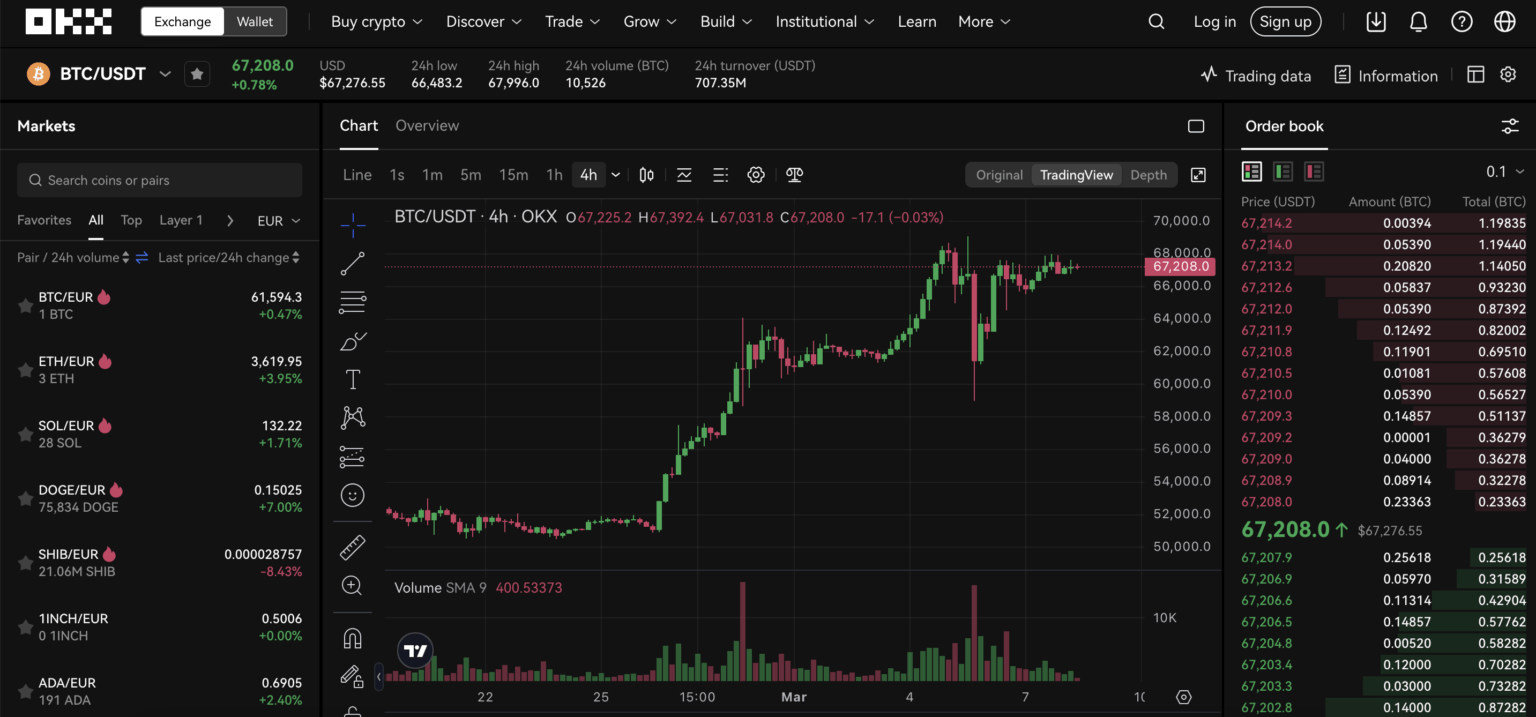
How to log in (step-by-step, with real-world tips)
Step 1 — Find the legit login page. Phishing is everywhere. If you want a direct path, bookmark the official login or use the trusted link I used often: okx sign in. Don’t type your credentials on random links you get in chat—nope. Really?
Step 2 — Username or email. Medium-length thought here: OKX accepts email or ID depending on region. If you manage multiple accounts, label them in your password manager. My instinct said a single account was fine—turns out I had two, and that confusion cost me a morning.
Step 3 — Password entry. Use long, unique passwords. Seriously. If you’re reusing a password from some other site—stop. You’ll sleep better. Also, if your password manager auto-fills and then the 2FA prompt disappears, try manual paste once in a while. Weird glitches happen with browser extensions.
Step 4 — 2FA. I prefer an authenticator app (Google Authenticator, Authy, or hardware key like YubiKey). SMS 2FA is better than nothing, but it’s more vulnerable to SIM swaps. Something felt off about relying on SMS alone—so swap it out if you can. And save your backup codes in a secure note. Yes, write them down in physical form if that’s your jam.
Step 5 — Device verification and email confirmations. If OKX asks you to verify a new device, don’t rush. Check the login timestamp and IP (if available). If it wasn’t you, lock the account and contact support. My instinct saved me once—saw a login from a city I’d never been to and froze the account. That pause prevented a mess.
Step 6 — Account recovery. If you can’t get in, prepare: email, ID, proof of transactions, and any KYC info handy. Recovery can take time—days sometimes—so start early. On one hand you want fast resolution; on the other hand, the platform has to verify you to prevent fraud. It’s annoying, but necessary.
Common login problems and quick fixes
Problem: No SMS or delayed code. Possible fix: switch to an authenticator app. Or check your phone network. Sometimes carrier delays happen. Also, if you’ve got multiple SIMs or dual-SIM phones, the SMS might land weirdly—keep an eye on the right number.
Problem: Authenticator codes don’t work. Often that means time drift. Auth apps rely on accurate device time. Sync your phone’s clock or resync the app. If that fails, use backup codes. If you didn’t save them—well, lesson learned the hard way.
Problem: Forgot email or used a work address you no longer have access to. Recovery is a pain—support will ask questions. My tip: keep a secure note listing which email is tied to which exchange. It’s simple and helps later. Oh, and by the way… don’t keep that note in a plaintext file on a shared computer.
Problem: Locked out after too many attempts. Wait it out, contact support, and be ready to verify identity. Patience is the key here. Also, use calmer hands next time—rushing makes typos more likely.
Security posture—what traders should do differently
Don’t just enable 2FA and forget it. Rotate recovery methods, check devices, and prune old sessions. If you used a phone number years ago, update it. If you’re trading US markets, regulatory pressures are evolving and exchanges are tightening checks; expect more verification sometimes. On one hand that slows the login flow. On the other hand it keeps bad actors out.
Use a hardware key if you want the gold standard. Sounds overkill? For frequent, high-volume traders, it’s not. My biased take: I sleep better with a physical key in my drawer. I’m not 100% sure it stops every attack, but it raises the bar dramatically.
Keep your software updated. Browser, OS, and authenticator app updates matter. Also, beware browser autofill on public machines—disable it. There’s nothing cute about having your credentials cached on a library computer.
Frequently Asked Questions
What if I lose access to my authenticator app?
If you saved backup codes, use them. If not, you’ll need to go through OKX support and identity verification. That process varies, can be slow, and might ask for KYC documents. Patience and thoroughness will speed it up—don’t skip details.
Is SMS 2FA adequate?
SMS is better than nothing, but it’s vulnerable to SIM swap attacks. Use an authenticator app or a hardware key for stronger protection. If you’re handling large amounts, treat security like a portfolio—diversify your defenses.
Can I speed up login for frequent access?
Enable device recognition, use a trusted device, and keep a secure password manager with auto-fill enabled locally. But balance convenience with security—too many shortcuts increase risk. Also, clear your settings periodically to remove old trusted devices.
Alright—closing thought (but not a neat little bow, because that’s boring): logging into OKX is part habit, part tech, part preparedness. Your gut will often flag odd logins, and your slower analysis should verify them. Initially I thought logins were mostly technical, though actually the human element matters equally. Keep backups, use good tools, and treat access like an asset you protect. You’ll thank yourself when a weird login shows up at 3 a.m.